

Why the 2010s Were a Golden Era for Safe SUVs
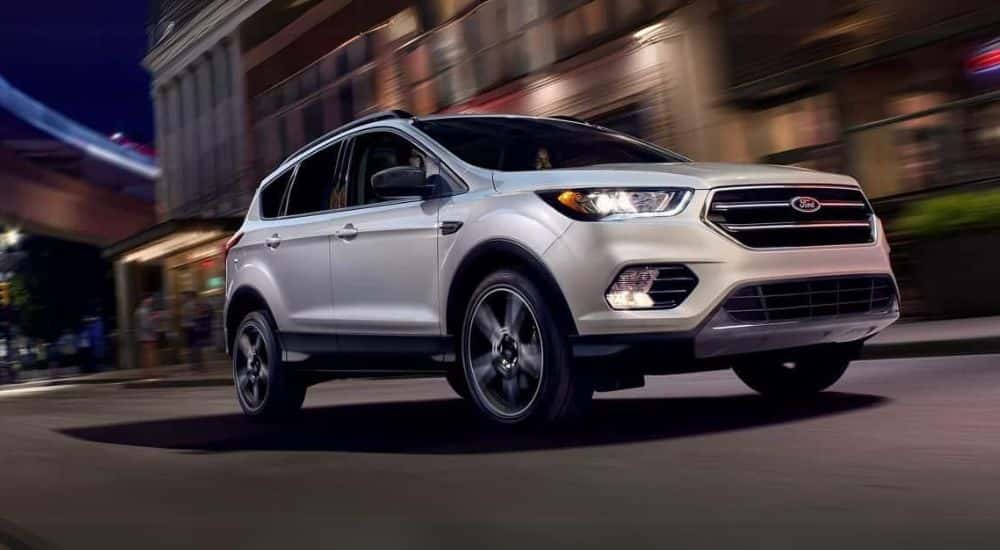
As you browse used SUVs for sale near Colonie, you’re sure to notice some of the differences between different model years. Some of these are just aesthetic: the popularity of different body shapes and paint colors waxes and wanes over time. Others are more significant, like tech and safety features.
Today, we’re going to look at a time period that saw some big changes for SUVs: the 2010s. Models from this decade were different from those that had come before in some big ways. If you want to know how and why, then read on to find out.
Post-2009 Push for Innovation
Sometimes, good things rise out of the ashes of disaster, and that’s the case here. Before we can talk about the highs of the 2010s, we need to look at the context. In 2008, the United States experienced a major recession that had sweeping effects across a number of industries. As car sales went down due to the economic downturn, the Big Three American automakers found themselves in a rough spot.
To entice buyers back to the market as consumer spending was starting to kick back into gear, automakers worked on adding innovative features to their lineups, including popular SUV models. These improvements gave drivers compelling reasons to opt for new models instead of sticking with more affordable used models.
Technological Advancements
Other industries in the 2010s were also seeing big changes, often for similar reasons. The advancements that allowed for more capable smartphones, tablets, and other personal devices didn’t stay contained in the realm of “Big Tech.” Many of the components that made these innovations possible also made it feasible to add tech features to SUVs.
Step inside a modern SUV and you’ll find plenty of computerized features, like a touchscreen that can display diagnostics for various systems, safety warnings, and navigation to help you get around Colonie and beyond. These sorts of features first appeared on many models during the 2010s, thanks to the larger technological revolution taking place at the time. As the necessary components for these features became smaller and more affordable, it allowed higher-tech features to become not just available on luxury vehicles, but commonplace across the automotive industry.
Backup Cameras
One of the first pieces of safety tech to become popular in SUVs was the backup camera. The height of an SUV is great for looking far ahead on the road, but it can be a problem when you’re looking for low-lying obstacles behind you. If you can’t see everything behind you while you’re backing up, you could run into something and damage your vehicle, or worse, hit a pedestrian who’s bending over to pick something up or is too short to enter your field of view.
With a simple camera pointed behind your vehicle that sends its picture to a screen whenever the vehicle is in reverse, this visibility issue is solved. While some automakers had been offering this feature earlier, it really started to take off in the 2010s. The Chevy Tahoe got a standard backup camera for the 2014 model year, for example.
The results of this technology entering the market were so good that the US Department of Transportation decided that backup cameras should be required, just like seatbelts. While the rule didn’t kick in fully until 2018, many automakers got ahead of the game and added standard backup cameras to their lineups before it was strictly necessary—especially for larger vehicles like SUVs.
Enhanced Stability
SUVs are generally bigger than cars. That’s great when you’re looking to get a lot of passengers around Colonie or fit bulky cargo into the back for transport. But it does have some downsides when it comes to safety. A higher center of gravity makes SUVs less stable than cars, and their larger bodies are more affected by strong gusts of wind, which can add to the issue.
Luckily, you don’t have to account for these extra forces on your own when you’re behind the wheel. Modern SUVs are equipped with electronic stability control, a system that works quietly in the background to keep you in control of your vehicle. This is another feature that was enshrined in regulation during the 2010s. By the 2012 model year, all light vehicles needed to include an electronic stability control system as a standard feature.
Driver Assist Technology
Driving is a complicated process, and even the most attentive driver in the world can have trouble dealing with the wide range of dangerous situations possible out on the road, especially out on the highway. Automakers know this, and there are many safety features that have been common for a long time. But many of these features only kick in once a collision has occurred, from seatbelts to airbags to crumple zones. Wouldn’t it be nice to be able to prevent accidents in the first place?
With driver assist technology, you get a variety of sensors that can act as an extra pair of eyes, or even an extra set of hands, out on the road. Here are just a few examples of some of driver assist features that have been helping drivers stay out of trouble for well over a decade now:
- Forward collision alert uses sensors to detect vehicles and other large obstacles ahead of you and gives you a warning when you’re close to hitting something.
- Automatic emergency braking steps in if you don’t react quickly enough or don’t brake hard enough, providing braking or supplemental braking to avoid a collision.
- Lane departure warning keeps track of lane lines painted on the road, and gives you a warning if you’re drifting unintentionally.
- Lane keep assist uses gentle corrective steering and braking to prevent you from drifting out of your lane.
- Blind spot monitoring tracks when a vehicle is in your blind spot and alerts you, often with an illuminated icon in the sideview mirror that makes it easy to tell at a glance when you should wait to change lanes.
- Adaptive cruise control takes the basic cruise control feature and makes it safer to use as traffic patterns change—it will keep you at your set speed until you get within a pre-set distance of the car in front of you, at which point it will slow to maintain that safe following distance.
- Automatic high-beam headlights turn your brights off automatically if they sense the headlights of an oncoming vehicle, so you can avoid dazing other drivers, then turn them back on when the coast is clear, leaving you free to focus on the road ahead.
These technologies and more started to get introduced to vehicles throughout the 2010s. By the 2020 model year, they had become so popular that they were starting to become standard fare on many SUVs, even on entry-level trims. But well before then, these options were available on mid-tier and top-tier trims across a wide variety of makes and models. Since SUVs are popular with families, they were prime candidates to get these updates early and feature them on a wide range of trims.
This Golden Age Left Its Mark
Looking back, it’s easy to see how the 2010s influenced the SUVs of today. Many of the innovations that were introduced or popularized during that decade are taken for granted by modern drivers, and some are even codified into regulation. If you’re shopping for a used SUV from this period or any time after, you can rest assured that it will be ready to get you around Colonie and beyond safely. Contact us or swing by one of our dealership locations today to find the perfect used SUV for you.



0 comment(s) so far on Why the 2010s Were a Golden Era for Safe SUVs